 English
 中文简体
中文简体 Deutsch
 Español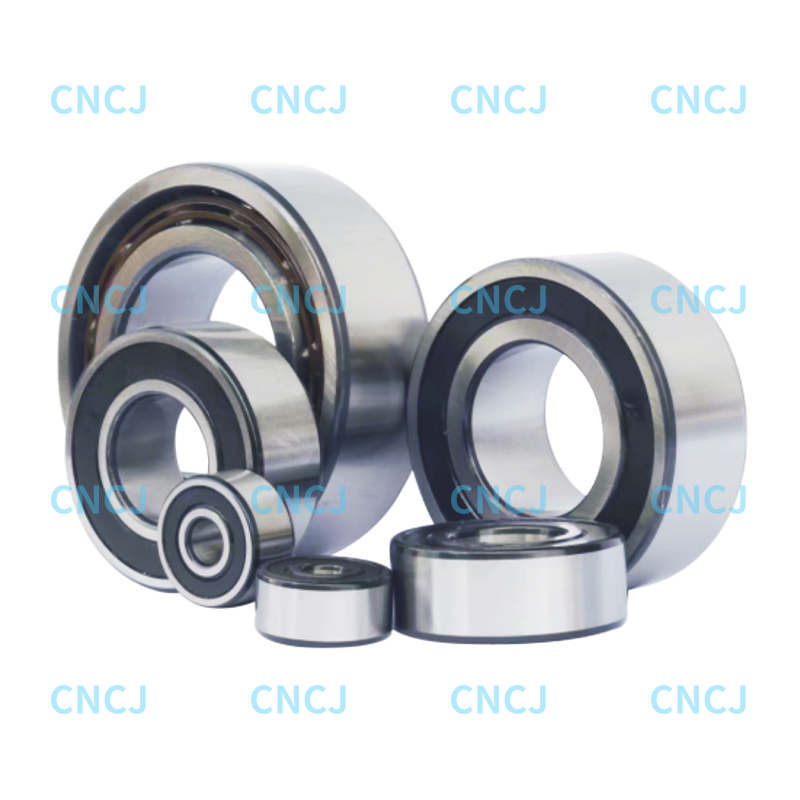
- TEL:
+86-574-63269198
+86-574-63261058
- FAX:
+86-574-63269198
+86-574-63261058
- E-MAIL:
- ADRESSE:
Industriezone Henghe, Ningbo, Zhejiang, China
- FOLGEN SIE UNS:

Inhalt
Zweireihige Schrägkugellager sind eine Lagerkonstruktion, die zwei Reihen von Schrägkugeln in einem einzigen Innen- und Außenring kombiniert, die Rücken an Rücken angeordnet sind, sodass sie gleichzeitig radiale Belastungen, axiale Belastungen in beide Richtungen und Momentbelastungen aufnehmen können. Der Kontaktwinkel jeder Reihe ist so eingestellt, dass die Lastlinien von gegenüberliegenden Seiten des Lagers auf der Lagerachse zusammenlaufen. Dadurch entsteht eine eigenständige Einheit, die Kippkräften standhält, ohne dass ein zweites, separat montiertes Lager für die entgegengesetzte Axialrichtung erforderlich ist. Vom Strukturprinzip her entspricht ein zweireihiges Schrägkugellager im Wesentlichen einem Back-to-Back (DB)-Paar aus zwei einreihigen Schrägkugellagern, die in einer schmaleren, kompakteren Einheit mit einem gemeinsamen Innen- und Außenring integriert sind (Quelle: NSK Global Technical Library; NTN Bearing Catalogue 2203E). Der Standardkontaktwinkel für die zweireihigen Lager der Serien 5200 und 5300 beträgt 25 Grad , während Schaeffler und einige andere Designfamilien einen Kontaktwinkel von 30 Grad verwenden, was die axiale Tragfähigkeit im Verhältnis zur radialen Tragfähigkeit erhöht (Quelle: NSK; Schaeffler TPI 213). Die kompakte Geometrie bedeutet, dass eine zweireihige Einheit wesentlich weniger axialen Raum einnimmt als zwei separat montierte einreihige Schrägkugellager mit derselben Bohrung und demselben Außendurchmesser. Dies macht sie zur bevorzugten Lösung überall dort, wo eine bidirektionale axiale Beschränkung in einem engen Einbauraum erforderlich ist. Zweireihige Schrägkugellager in den Serien 30 und 38 decken eine Reihe von Bohrungsgrößen und Dichtungsoptionen ab, die genau für diese Art von kompakter, multidirektionaler Lastanwendung geeignet sind.
Der Kontaktwinkel ist der wichtigste geometrische Parameter, der ein Schrägkugellager von einem Rillenkugellager unterscheidet, und bestimmt direkt das Verhältnis der axialen zur radialen Belastbarkeit, die das Lager liefern kann.
In jedem Wälzlager übertragen die Kugeln über Kontaktpunkte die Last zwischen der Innenringlaufbahn und der Außenringlaufbahn. Bei einem Rillenlager liegen diese Kontaktpunkte auf einer Linie senkrecht zur Wellenachse, wodurch das Lager für radiale Belastungen gut geeignet ist, axiale Belastungen jedoch nur gelegentlich aufnehmen kann. Bei einem Schrägkugellager sind die Laufbahnen so versetzt, dass die Verbindungslinie der beiden Kontaktpunkte einen Winkel mit der Radialebene bildet. Dieser Winkel ist der Kontaktwinkel, der mit Alpha bezeichnet wird. Wenn auf ein Schräglager eine rein axiale Belastung ausgeübt wird, wird diese über diese schräge Kontaktlinie übertragen, die die Kraft in eine Radialkomponente und eine Axialkomponente innerhalb der Lagergeometrie auflöst. Je höher der Kontaktwinkel, desto größer ist der Anteil der aufgebrachten Axiallast, der effizient aufgenommen wird, und desto größer ist das Verhältnis von Axial- zu Radiallast, das das Lager aushalten kann, bevor die Kontaktspannung kritisch wird (Quelle: NTN-Lagerkatalog 2203E; brkbearings.com).
Einreihige Schrägkugellager sind in vier Standard-Kontaktwinkelkonfigurationen erhältlich: 15 Grad, 25 Grad, 30 Grad und 40 Grad. Bei der 15-Grad-Variante stehen Hochgeschwindigkeitsbetrieb und geringe axiale Steifigkeit im Vordergrund. Die 40-Grad-Variante priorisiert die maximale axiale Belastbarkeit auf Kosten einer reduzierten Drehzahl und einer höheren Wärmeentwicklung. Zweireihige Schrägkugellager der Standardserie 5000 (Serie 5200, 5300) werden mit a hergestellt 25 Grad Kontaktwinkel pro Reihe, Rücken an Rücken angeordnet, sodass jede Reihe axiale Belastungen aus einer Richtung aufnehmen kann. Hochleistungsvarianten, darunter die Schaeffler-Designfamilie, nutzen a 30 Grad Kontaktwinkel Dies sorgt für einen höheren axialen Lastanteil, führt aber zu einer entsprechenden Reduzierung der Drehzahlgrenze für den Dauerbetrieb (Quelle: NSK Global; Schaeffler TPI 213).
Eine äußerst wichtige Fähigkeit, die durch die zweireihige Anordnung ermöglicht wird, ist die Widerstandsfähigkeit gegenüber Momentbelastungen, auch Kippmomente genannt. Eine Momentenbelastung bewirkt, dass sich die Welle relativ zum Gehäuse um eine Achse senkrecht zur Wellenmittellinie dreht. Ein einreihiges Schrägkugellager oder ein einzelnes Rillenkugellager kann dieser Art von Belastung nicht zuverlässig standhalten, da die Kontaktzone auf einer Seite überlastet würde, während die gegenüberliegende Seite den Kontakt verlieren würde. Durch die Rücken-an-Rücken-Anordnung eines zweireihigen Lagers entsteht eine große effektive Spannweite zwischen den beiden Lastlinien, selbst innerhalb der einzelnen Lagerbreite, wodurch ein mechanischer Momentenarm entsteht, der Kippkräften standhält. Aus diesem Grund werden zweireihige Schrägkugellager für Anwendungen spezifiziert, bei denen Wellenbiegung, Querkräfte oder Kreiselkräfte Momentbelastungen auf die Lagerposition erzeugen (Quelle: NTN-Lagerkatalog 2203E).
Das Verständnis des inneren Aufbaus eines zweireihigen Schrägkugellagers erklärt, warum bestimmte Konstruktions- und Materialauswahlen die Leistung auf eine Weise beeinflussen, die nicht immer allein aus der Katalogtragfähigkeit ersichtlich ist.
Die Innen- und Außenringe standardmäßiger zweireihiger Schrägkugellager werden aus kohlenstoffreichem Chrom-Lagerstahl, am häufigsten 52100 oder gleichwertigen nationalen Standardsorten, hergestellt, der auf eine Oberflächenhärte typischerweise im Bereich von 58 bis 65 HRC durchgehärtet ist. Die Laufbahnen werden mit engen Toleranzen hinsichtlich Durchmesser, Rundheit und Oberflächenrauheit geschliffen, da die Oberflächenqualität an der Kontaktzone direkt die Spannungsverteilung unter Last und den Geräusch- und Vibrationspegel im Betrieb bestimmt. Die Schultergeometrie an jedem Ring ist darauf ausgelegt, den Versatz zwischen den beiden Laufbahnreihen zu erzeugen, der den gewünschten Kontaktwinkel erzeugt, und diese Schulterhöhe legt auch die maximale Axiallast fest, die die Ringe tragen können, bevor die Kontaktspannung zur Ringschulter wandert und nicht auf der Laufbahn verbleibt.
Die Kugeln in beiden Reihen werden typischerweise aus dem gleichen 52100-Lagerstahl wie die Ringe oder bei Hochgeschwindigkeits- oder korrosionskritischen Anwendungen aus einer Keramik wie Siliziumnitrid (Si3N4) hergestellt. Der Kugeldurchmesser und die Anzahl der Kugeln pro Reihe werden während des Konstruktionsprozesses ausgewählt, um die dynamische Tragzahl, die statische Tragzahl und die Geschwindigkeitsfähigkeit des Lagers für die vorgesehene Anwendungsreihe zu optimieren. Innerhalb einer bestimmten Serie erhöht ein größerer Kugeldurchmesser die Tragzahl, verringert jedoch die maximal zulässige Geschwindigkeit, da die Zentrifugalkraft auf jede Kugel mit der Kugelmasse und dem Quadrat der Geschwindigkeit skaliert. Präzisionskugeln weisen eine Durchmesserabweichung von weniger als 0,00025 mm zwischen Kugeln in derselben Reihe auf, da selbst kleine Durchmesserunterschiede zu einer ungleichmäßigen Lastverteilung führen, wodurch die effektive Tragzahl unter den Katalogwert sinkt.
Der Käfig trennt die Kugeln und sorgt für einen gleichmäßigen Umfangsabstand, sodass die Last gleichmäßig über den Lagerumfang verteilt wird. Zweireihige Schrägkugellager sind mit zwei Hauptkäfigtypen erhältlich (Quelle: NSK Global; NTN):
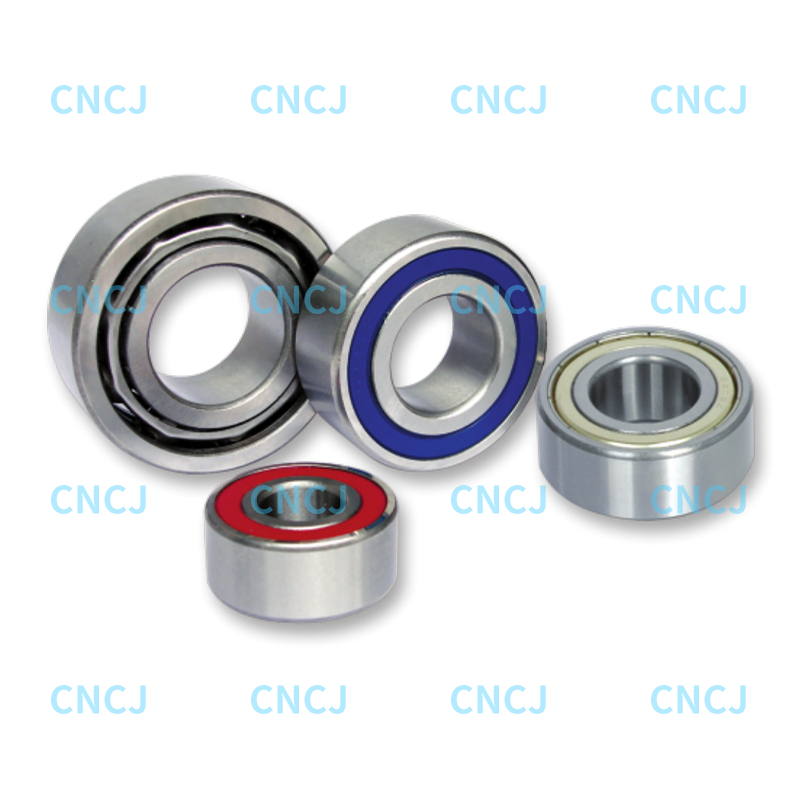
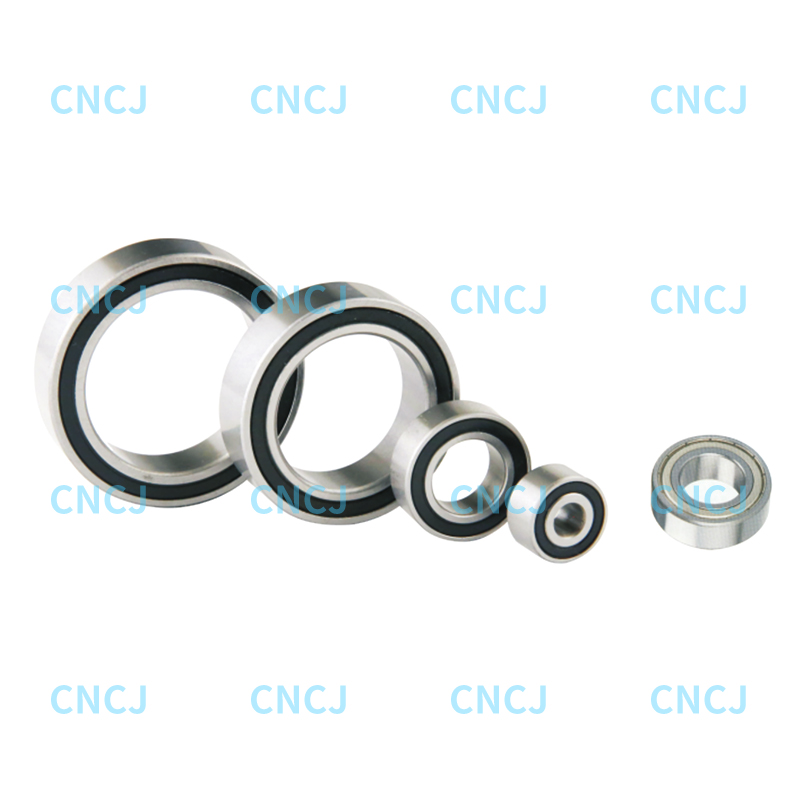
Offene zweireihige Schrägkugellager erfordern eine externe Schmierung durch regelmäßige Fettnachfüllung oder ein Druckölsystem. Abgedichtete und abgeschirmte Varianten sind erhältlich und werden zunehmend für Anwendungen spezifiziert, bei denen der Wartungszugang eingeschränkt ist oder das Eindringen von Verunreinigungen ein Problem darstellt (Quelle: NTN Bearing Catalogue 2203E; NSK). Die am häufigsten verwendeten Suffixbezeichnungen sind:
| Suffixcode | Designbeschreibung | Typischer Anwendungsvorteil |
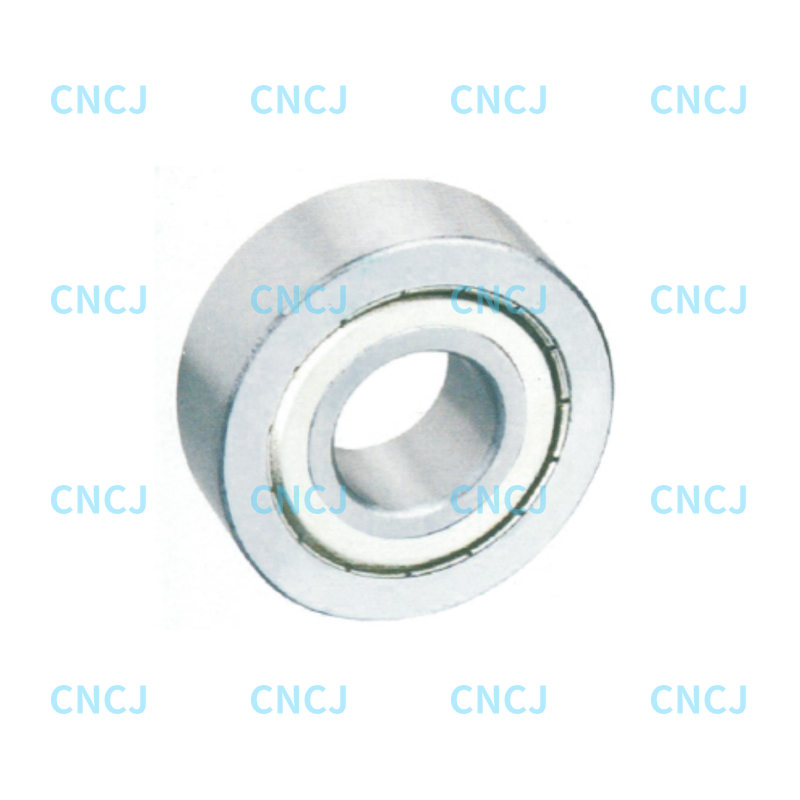
| ZZ oder 2Z | Berührungslose Stahlschirme auf beiden Seiten | Reduziert das Eindringen von Verunreinigungen; ermöglicht etwas höhere Geschwindigkeit als Kontaktdichtungen; Behält die anfängliche Fettfüllung bei |
| 2RS oder DDU | Kontaktgummidichtungen auf beiden Seiten | Höherer Kontaminationsausschluss als Abschirmungen; vorgefettet und wartungsfrei; leichte Geschwindigkeitsreduzierung |
| Offen (kein Suffix) | Keine Siegel oder Schilde | Geeignet für Ölbad- oder Umlaufölsysteme; höchste Geschwindigkeitsfähigkeit; erfordert eine externe Filterung, um die Kontamination zu kontrollieren |
Die in der Serie verwendete Namenskonvention für die Serien 30-2RS, 38-2RS, 30-ZZ und 38-ZZ Zweireihige Schrägkugellager Die Produktpalette kodiert sowohl die Seriennummer als auch den Dichtungstyp direkt in die Lagerbezeichnung, sodass sich allein anhand der Teilenummer leicht erkennen lässt, welche Variante für eine bestimmte Anwendung geeignet ist.
Die Leistung eines jeden Wälzlagers wird hauptsächlich durch drei Bewertungswerte charakterisiert: die dynamische Grundtragzahl, die statische Grundtragzahl und die Grenzgeschwindigkeit. Diese Zahlen werden durch die Innengeometrie des Lagers bestimmt und müssen im Verhältnis zum tatsächlichen Lastzyklus und der tatsächlichen Geschwindigkeit der Anwendung richtig interpretiert werden, bevor eine zuverlässige Lebensdauer vorhergesagt werden kann.
Die grundlegende dynamische Tragzahl (C) ist definiert als die konstante Radiallast, unter der eine Gruppe identischer Lager eine Nennlebensdauer von einer Million Umdrehungen bei einer Zuverlässigkeit von 90 Prozent erreicht, entsprechend der in ISO 281 definierten Berechnungsmethode. Bei einem zweireihigen Schrägkugellager ist die dynamische Tragzahl höher als die eines einreihigen Lagers mit derselben Bohrung, da zwei Kugelreihen die aufgebrachte Last teilen und die Hertz'sche Kontaktspannung auf eine größere Anzahl von Kontaktpunkten verteilen. Als praktische Referenz: Das Lager der Serie 5200 mit einer Bohrung von 10 mm (Lagernummer 5200) weist eine dynamische Tragzahl von auf 7.150 N , während die Serie 5203 mit einer 17-mm-Bohrung etwa 12.700 N trägt und die Serie 5204 mit einer 20-mm-Bohrung etwa 15.900 N trägt (Quelle: NSK-Katalog für abgedichtete und abgeschirmte zweireihige Schrägkugellager, Dokument e1249b).
Die grundlegende statische Tragzahl (C0) definiert die Belastung, unter der die maximale Kontaktspannung zwischen einer Kugel und der Laufbahn etwa 4.000 MPa erreicht. Dies ist der Wert, bei dem eine lokale plastische Verformung der Laufbahn beginnt, einen bleibenden Eindruck zu erzeugen, der die Vibrationen und Geräusche während des späteren Betriebs erhöht. Unter Verwendung der gleichen NSK-Referenzdaten hat die 5200-Serie (10-mm-Bohrung) eine statische Tragzahl von 3.900 N, während die 5203 (17-mm-Bohrung) 8.300 N und die 5204 (20-mm-Bohrung) 10.700 N hat (Quelle: NSK-Katalog e1249b). Anwendungen mit Stoßbelastungen, starken statischen Belastungen während der Montage oder starken Momentbelastungen bei niedriger Geschwindigkeit müssen anhand der statischen Bewertung und nicht anhand der dynamischen Bewertung bewertet werden.
Wenn ein Lager einer kombinierten radialen und axialen Belastung statt einer rein radialen Belastung ausgesetzt ist, muss eine äquivalente dynamische Belastung P berechnet werden, bevor die Lebensdauergleichung nach ISO 281 angewendet wird. Für zweireihige Schrägkugellager lautet die Standardformel P = Für die versiegelte und abgeschirmte zweireihige Serie sind typische Werte, wenn Fa/Fr kleiner oder gleich e ist, X = 1, Y = 0,92, und wenn Fa/Fr e überschreitet, Diese Werte ändern sich je nach Kontaktwinkel und Lagerserie, und Konstrukteure sollten immer die Werte aus dem Datenblatt des jeweiligen Herstellers für die verwendete Lagerserie verwenden.
Die Geschwindigkeitsgrenze eines zweireihigen Schrägkugellagers wird durch die an den Wälzkontakten und an der Grenzfläche zwischen Käfig und Kugel erzeugte Wärme festgelegt und üblicherweise entweder als Geschwindigkeitsgrenze für Fett oder als Geschwindigkeitsgrenze für Öl ausgedrückt, wobei die Ölgrenze typischerweise 20 bis 30 Prozent höher ist als die Fettgrenze. Bei abgedichteten und abgeschirmten Varianten gilt eine niedrigere Geschwindigkeitsbegrenzung als bei gleichwertigen offenen Lagern, da die Reibung der Dichtungslippe oder die Nähe der Abschirmung Wärme hinzufügen, die die feste Fettfüllung ohne externe Kühlung abführen muss. Die Norm DIN 628-3, die die Hauptabmessungen für zweireihige Schrägkugellager regelt, legt Maßgrenzen fest, die die Austauschbarkeit zwischen Lagerherstellern innerhalb derselben Baureihe gewährleisten (Quelle: Schaeffler TPI 213).
Das korrekte Lesen der Bezeichnung eines zweireihigen Schrägkugellagers ermöglicht es einem Ingenieur oder Einkaufsspezialisten, den Bohrungsdurchmesser, die Serie (und damit den Außendurchmesser und die Breite) und die Dichtungskonfiguration anhand der Teilenummer zu bestätigen, ohne eine vollständige Maßtabelle zu Rate ziehen zu müssen.
| Teilenummerelement | Bedeutung | Beispiel |
| Erste zwei oder drei Ziffern (5200, 5300, 3200, 3300) | Serienbezeichnung; kodiert Außendurchmesserreihen und zweireihige Typen | 5200 = Standardleuchte zweireihig; 5300 = mittlere Doppelreihe |
| Restliche Ziffern | Code für die Bohrungsgröße; Für Größen über 04 mit 5 multiplizieren, um die Bohrung in mm zu erhalten | 5204 = 04-Code, 04 x 5 = 20 mm Bohrung |
| ZZ oder 2Z suffix | Berührungslose Stahlschirme auf beiden Seiten | 5204 ZZ = 20 mm Bohrung, beidseitig geschirmt |
| 2RS oder DDU suffix | Kontaktgummidichtungen auf beiden Seiten | 5204 2RS = 20 mm Bohrung, beidseitig abgedichtet |
| Kein Suffix (offen) | Keine Siegel oder Schilde, requires external lubrication | 5204 = 20 mm Bohrung, offene Ausführung |
| C2-, C3-, C4-Suffix | Interne Clearance-Gruppe; C3 ist größer als normal, C2 ist kleiner | 5204 C3 = 20 mm Bohrung, größeres Innenspiel |
Die Referenzen der Serien 30 und 38 in der Produktbezeichnung beziehen sich auf die Klassifizierung der Lageraußendurchmesserserien. Die Baureihen 30 und 38 in zweireihigen Schrägkugellagern geben einen bestimmten Abmessungsbereich an, und die zugehörigen Suffixvarianten 2RS und ZZ geben direkt an, ob Kontaktdichtungen oder Stahlschilde verwendet werden, sodass die richtige Variante für fettgeschmierten abgedichteten Betrieb bzw. abgeschirmten Betrieb spezifiziert werden kann.
Um ein zweireihiges Schrägkugellager für eine Anwendung auszuwählen, muss man verstehen, wie es sich von den anderen Lagertypen unterscheidet, die möglicherweise für die gleiche Position in Betracht gezogen werden könnten.
Ein einreihiges Schrägkugellager kann Axiallasten nur in einer Richtung aufnehmen, da die versetzte Laufbahngeometrie eine Kontaktlinie erzeugt, die nur von einer Seite auf die Achse zuläuft. Um bidirektionale Axiallasten mit einreihigen Lagern zu unterstützen, müssen zwei Lager gegenüberliegend montiert werden, entweder Rücken an Rücken (DB), Fläche an Fläche (DF) oder in Tandemanordnung (DT für axialen Lastanstieg in gleicher Richtung). Ein zweireihiges Lager erreicht die gleiche bidirektionale axiale Beschränkung in einer einzigen, schmaleren Einheit mit einem Innenring und einem Außenring, was die Gehäusekonstruktion vereinfacht und den axialen Platzbedarf reduziert. Der Nachteil besteht darin, dass die zweireihige Einheit einen festen Kontaktwinkel und eine Rücken-an-Rücken-Anordnung aufweist, die nicht geändert werden kann, wohingegen eine paarweise einreihige Anordnung dem Ingenieur die Auswahl der gegenüberliegenden Montage ermöglicht, wenn die Anwendungsgeometrie andere Momentenarmeigenschaften erfordert (Quelle: NSK Global; NTN-Lagerkatalog 2203E).
Ein Rillenkugellager verfügt über eine symmetrische Laufrille an beiden Ringen, die es ihm ermöglicht, mäßige Axiallasten in beide Richtungen zu tragen, aber die Lastlinie bleibt bei niedrigen Axiallasten im Wesentlichen radial und das Lager hat keinen definierten Kontaktwinkel. Bei geringen bis mittleren kombinierten Belastungen bei hohen Drehzahlen ist ein Rillenkugellager oft wirtschaftlicher und erreicht höhere Drehzahlwerte als ein Schrägkugellager gleicher Größe. Rillenlager können jedoch nicht die starre axiale Positionierung einer Welle bieten, die ein Schräglager bietet, und sie sind nicht für Anwendungen geeignet, bei denen Momentbelastungen standgehalten werden müssen oder bei denen eine präzise axiale Steifigkeit Teil des Systemdesigns ist (Quelle: brkbearings.com).
Ein Kegelrollenlager trägt höhere radiale und axiale Belastungen als ein Schrägkugellager mit derselben Bohrungsgröße, da der Linienkontakt zwischen den Rollen und den Laufbahnen die Belastung über eine größere Fläche verteilt und so die Kontaktspitzenbelastung reduziert. Kegelrollenlager erfordern jedoch eine präzise Einstellung der axialen Vorspannung bei der Montage, erzeugen bei hohen Drehzahlen aufgrund der Gleitreibung am Rollenendflansch mehr Wärme und haben eine niedrigere Drehzahlgrenze als Schrägkugellager. Für Anwendungen mit mittlerer Geschwindigkeit, bei denen mäßige kombinierte Belastungen und eine kompakte Geometrie die Hauptanforderungen sind, werden zweireihige Schrägkugellager im Allgemeinen gegenüber Kegelrollenlagern bevorzugt.
| Attribut | Zweireihiger Winkelkontakt | Einreihiger Winkelkontakt (gepaart) | Rillenkugellager | Kegelrollenlager |
| Bidirektionale axiale Unterstützung | Ja, in einer Einheit | Ja, erfordert zwei Lager | Mäßig, kein definierter Kontaktwinkel | Ja, erfordert zwei oder ist als Einheit vorinstalliert |
| Momentlastwiderstand | Hoch | Hoch in DB arrangement | Niedrig | Hoch |
| Kompakte axiale Breite | Hoch, single unit | Niedriger, two housings needed | Hoch | Mäßig |
| Geschwindigkeitsfähigkeit | Hoch | Hoch | Hochest | Niedriger |
| Radiale Tragfähigkeit pro Größe | Mittel | Mittel | Mittel | Hoch |
| Komplexität der Montage | Niedrig, drops into one housing | Hocher, two-bearing setup | Niedrig | Erfordert eine präzise axiale Einstellung |
Zweireihige Schrägkugellager werden in Anwendungen eingesetzt, die eine gemeinsame Anforderung haben: bidirektionale axiale Beschränkung auf engstem Raum mit mäßiger bis hoher Geschwindigkeit, bei der Momentbelastungen oder kombinierte Belastungen ein Rillenlager unzureichend machen.
Elektromotoren verwenden häufig zweireihige Schrägkugellager am Antriebsende, wo Axialkräfte durch Riemenspannung, Schrägverzahnungsschub oder Lüfterflügelbelastung je nach Start-Stopp-Richtung eine bidirektionale Axiallast erzeugen. Das kompakte Design mit einer Einheit vereinfacht die Konstruktion des Motorgehäuses im Vergleich zu einer Anordnung mit zwei Lagern, und der 25-Grad-Kontaktwinkel der Standardserien 5200 und 5300 bietet die Kombination aus angemessener axialer Steifigkeit und Drehzahlnennwert, die für die meisten Induktionsmotoranwendungen geeignet ist. NSK nennt Pumpen, Elektromotoren und Gebläse als die wichtigsten typischen Anwendungen für diesen Lagertyp (Quelle: NSK Global Technical Library).
Kreiselpumpen erzeugen axiale Schubkräfte, die bei Änderungen der Durchflussrate und der Druckdifferenz die Richtung umkehren. Diese bidirektionale axiale Belastung ist genau die Bedingung, für die zweireihige Schrägkugellager ausgelegt sind. Pumpenkonstruktionen mit hoher Kapazität, die ein Lager mit einem Kontaktwinkel von 30 Grad verwenden, können die höheren Axiallasten aufnehmen, die für mehrstufige Kreiselpumpen typisch sind, und dabei dennoch eine ausreichende Drehzahlfähigkeit für die meisten Pumpenbetriebsbedingungen beibehalten. Die abgedichteten und abgeschirmten Varianten mit 2RS- oder ZZ-Bezeichnung werden häufig in Pumpenanwendungen verwendet, bei denen der Lagerhohlraum für eine regelmäßige Nachschmierung nicht zugänglich ist.
Schrägverzahnungen erzeugen eine axiale Komponente der Zahnlast, die entlang der Wellenachse wirkt, und die Richtung dieser Schubkraft kehrt sich zwischen dem Ritzel und dem Zahnrad in einem Paar um. Zweireihige Schrägkugellager an den Wellenenden begrenzen diesen Schub in beide Richtungen, ohne dass separate Axiallagerpositionen oder zusätzliche axiale Vorspannungsanordnungen erforderlich sind. Bei kompakten Industriegetrieben, bei denen die Minimierung der Gehäuselänge eine Konstruktionspriorität ist, spart das einteilige zweireihige Lager an jeder Wellenposition im Vergleich zu einer paarweisen einreihigen Anordnung eine erhebliche axiale Bauraumeinsparung.
CNC-Werkzeugmaschinenspindeln, insbesondere solche, die im mittleren Drehzahlbereich betrieben werden, verwenden zweireihige Schrägkugellager, um eine starre axiale und radiale Positionierung der Spindel relativ zum Spindelstockgehäuse zu gewährleisten. Der Momentenlastwiderstand ist bei dieser Anwendung besonders wertvoll, da an der Werkzeugspitze wirkende Schnittkräfte ein Biegemoment an der vorderen Lagerposition erzeugen, das bei Verwendung eines Standard-Rillenrillenlagers zu einer unzulässigen Spindeldurchbiegung führen würde. Für die höchsten Steifigkeitsanforderungen in dieser Anwendungskategorie sind präzisionsvorgespannte zweireihige Lager mit einem geringeren Innenspiel als normal (Spielklasse C2) spezifiziert.
Getriebe für landwirtschaftliche Maschinen, Getriebe für Traktoren und einige Antriebsanwendungen für Kfz-Nebenaggregate verwenden zweireihige Schrägkugellager an Stellen, an denen kombinierte radiale und axiale Belastungen mit Momentkomponenten in einer kompakten, wartungsfreien, abgedichteten Einheit aufgenommen werden müssen. Die abgeschirmten ZZ- oder 2RS-abgedichteten Varianten eignen sich besonders für diese Anwendungen, da der Wartungszugang normalerweise begrenzt ist und während eines Wartungsintervalls von Hunderten von Betriebsstunden ein Schutz vor Verunreinigungen durch Erde, Ernterückstände oder Straßensand erforderlich ist.
Schmierung ist die häufigste Ursache für den Ausfall von Wälzlagern. Um die erwartete Lebensdauer in jeder Anwendung zu erreichen, ist das Verständnis der Schmierungsanforderungen speziell für zweireihige Schrägkugellager von entscheidender Bedeutung.
Abgedichtete 2RS- und abgeschirmte ZZ-Lager werden bei der Herstellung werkseitig mit Fett gefüllt und sind so konzipiert, dass sie während ihrer vorgesehenen Lebensdauer unter normalen Betriebsbedingungen wartungsfrei sind. Das Fettfüllvolumen wird in der Herstellungsphase optimiert, um eine ausreichende Schmierung ohne übermäßige Planschverluste zu gewährleisten, die Wärme erzeugen und die effektive Lebensdauer des Fetts verkürzen würden. Der Austausch dieser Lager am Ende ihrer erwarteten Lebensdauer ist im Allgemeinen kostengünstiger als der Versuch, das Fett nachzufüllen, da die abgedichtete oder abgeschirmte Konstruktion den Zugang zum Fetthohlraum nicht erleichtert, ohne die Dichtfunktion zu beeinträchtigen.
Offene zweireihige Schrägkugellager erfordern eine externe Fettaufbringung. Das Fettfüllvolumen im Lagerhohlraum und im Gehäuse sollte typischerweise zwischen einem Drittel und der Hälfte des verfügbaren freien Raums ausfüllen; Eine Überfüllung führt zu aufgewühlter Hitze, die den Fettabbau beschleunigt und die Lagerlebensdauer verkürzt. Lithiumbasierte Fette oder Lithiumkomplexfette mit einer Konsistenz der NLGI-Klasse 2 sind für die meisten Standardgeschwindigkeits- und Temperaturbedingungen geeignet. Die Schaeffler-Richtlinie zu Ölwechselintervallen für ölgeschmierte zweireihige Schrägkugellager empfiehlt, die im FVA-Projekt Nr. 171 festgelegten Intervalle einzuhalten und sie je nach Betriebstemperatur und Verschmutzungsgrad anzupassen (Quelle: Schaeffler TPI 213).
Bei höheren Drehzahlen, bei denen Fettschmierung übermäßige Wärme erzeugen würde, können offene zweireihige Schrägkugellager über eine Ölbadanordnung, Ölnebel oder eine Ölzirkulation mit Öl geschmiert werden. Die Ölumwälzung mit einem externen Kühler und Filter ist die bevorzugte Methode für Anwendungen mit höchster Drehzahl und hoher Belastung wie Werkzeugmaschinenspindeln und Hochgeschwindigkeitskompressoren, da sie gleichzeitig schmiert, kühlt und Verschleißrückstände aus dem Lagerhohlraum entfernt.
Der korrekte Einbau ist ebenso wichtig wie die richtige Lagerauswahl, um die Nennlebensdauer zu erreichen, insbesondere bei zweireihigen Schrägkugellagern, die mit geeigneten Passungen und axialer Positionierung eingebaut werden müssen.
Der Innenring eines zweireihigen Schrägkugellagers wird normalerweise mit einer Presspassung auf der Welle montiert, wenn sich der Innenring relativ zur Lastrichtung dreht. Dies ist die häufigste Konfiguration bei rotierenden Maschinen. Eine Presspassung stellt sicher, dass der Ring unter der rotierenden Last nicht auf der Wellenoberfläche kriecht, was zu Reibverschleiß an der Welle führen und Hitze erzeugen würde. Der Außenring wird typischerweise mit einer leichten Press- oder Übergangspassung im Gehäuse montiert. Das Ausmaß des Übermaßes wird in den Passungstoleranztabellen nach ISO 286 angegeben und auf der Grundlage der Lagergröße, Drehzahl und Belastungsgröße ausgewählt; Größere Lager und schwerere Lasten erfordern engere Passungen, um ein Kriechen unter Last zu verhindern.
Zweireihige Schrägkugellager sind in mehreren internen Lagerluftgruppen erhältlich: C2 (kleiner als normal), CN (normal, die Standardeinstellung, wenn kein Lagerluftsuffix angegeben ist), C3 (größer als normal) und C4 (noch größer). Die richtige Spielgruppe hängt von der Wellen- und Gehäusepassung und der erwarteten Betriebstemperatur ab. Eine Presspassung auf der Welle verringert das Innenspiel nach dem Einbau, sodass ein Lager, das vor dem Einbau das normale Spiel misst, nach dem Einbau möglicherweise ohne Spiel oder mit leichter Vorspannung betrieben wird. Wenn sich die Welle aufgrund der Betriebstemperatur schneller ausdehnt als das Gehäuse, kommt es während des Betriebs zu einer weiteren Reduzierung des Spiels. Bei Anwendungen, bei denen die Welle deutlich heißer läuft als das Gehäuse, gleicht ein C3- oder C4-Startspiel diesen Wärmeausdehnungsunterschied aus und verhindert, dass das Lager mit übermäßiger Vorspannung arbeitet (Quelle: NTN-Lagerkatalog 2203E).
Eine leichte Vorspannung, bei der das Lager ohne Innenspiel oder mit einer sehr geringen elastischen Verformung zwischen den beiden Reihen arbeitet, erhöht die radiale und axiale Steifigkeit der Lagerposition und reduziert Vibrationen und Geräusche bei schwankenden Belastungen. Spindellager von Werkzeugmaschinen sind üblicherweise vorgespannt, um die Positionierungsgenauigkeit zu verbessern. Übermäßige Vorspannung erzeugt Wärme und erhöht die Ermüdungsspannung, was die Lebensdauer verkürzt. Daher muss die Vorspannung sorgfältig spezifiziert und während der Montage anhand von Messungen der axialen Vorspannkraft oder des Anlaufdrehmoments überprüft werden.
Durch das Verständnis der Ausfallarten von zweireihigen Schrägkugellagern können Wartungsingenieure Verschleiß frühzeitig erkennen und den Lageraustausch planen, bevor ein katastrophaler Ausfall zu Sekundärschäden an der Welle, dem Gehäuse oder der Maschine führt.
Durch Rollkontaktermüdung entstehen Risse unter der Oberfläche im Laufbahn- oder Kugelmaterial, die sich bis zur Oberfläche ausbreiten und schließlich dazu führen, dass Material abbricht und Abplatzungen oder Grübchen entstehen. Abplatzungen erzeugen eine charakteristische hochfrequente Vibrationssignatur, die durch eine Beschleunigungsmesser-basierte Vibrationsüberwachung mithilfe einer Lagerdefektfrequenzanalyse erkannt werden kann. Die charakteristischen Fehlerfrequenzen für den Außenring, den Innenring und die Kugeln hängen von der Lagergeometrie und der Drehzahl ab. Diese Frequenzen können aus Standardparametern der Lagergeometrie mithilfe von Gleichungen berechnet werden, die in ISO 15243 und verwandten Normen definiert sind.
Partikelverunreinigungen im Schmiermittel führen zu einem Dreikörper-Abrasivverschleiß an den Wälzkontakten, der die Laufbahnoberfläche allmählich aufraut, Vibrationen und Geräusche erhöht und schließlich Verschleißpartikel einführt, die den Schadenszyklus beschleunigen. Abgedichtete und abgeschirmte zweireihige Lager bieten in den meisten industriellen Umgebungen einen wesentlich besseren Schutz vor Verschmutzung als offene Lager. Dies ist einer der Hauptgründe dafür, dass die 2RS- und ZZ-Varianten den offenen Lagern vorgezogen werden, wenn in der Betriebsumgebung Staub, Späne oder das Risiko des Eindringens von Prozessflüssigkeit besteht.
Unzureichendes Schmiermittel, minderwertiges Schmiermittel oder Schmiermittel des falschen Typs führen zu Metall-zu-Metall-Kontakt an den Wälzschnittstellen, was zu einem schnellen Temperaturanstieg, adhäsivem Verschleiß, Verschmieren der Kugel- und Laufbahnoberflächen und schließlich zum Fressen führt. Bei abgedichteten und abgeschirmten Lagern tritt ein Schmierungsausfall typischerweise am oder nahe dem Ende der Lagerlebensdauer auf, wenn das werkseitig eingefüllte Fett aufgrund thermischer und mechanischer Zersetzung zersetzt ist. Eine frühzeitige Erkennung durch Temperaturüberwachung des Lagergehäuses oder periodische Schwingungssignaturanalyse ermöglicht die Planung des Austauschs vor dem Ausfall und nicht erst danach.
+86-574-63269198
+86-574-63261058
+86-574-63269198
+86-574-63261058
Industriezone Henghe, Ningbo, Zhejiang, China
Bitte hinterlassen Sie Ihre E-Mail-Adresse, damit wir uns so schnell wie möglich mit Ihnen in Verbindung setzen können.
Copyright © Ningbo Wanshun Bearing Co., Ltd. Alle Rechte vorbehalten.
